


Physical AI: Beyond the Screen
For decades, the “brain” of Artificial Intelligence was trapped behind a glass pane. We interacted with it through keyboards and touchscreens, watching it process data, generate text, and “think” in a purely digital vacuum. But as we move through 2026, that glass wall has shattered. We have entered the era of Physical AI—the integration of advanced neural networks directly into the “muscles” of robotics and hardware.
This isn’t just about a robot following a script; it’s about machines that perceive, reason, and act in the messy, unpredictable physical world. From million-robot fleets managed by logistics giants to affordable “cobots” (collaborative robots) showing up in local bakeries, Physical AI is redefining what it means to automate a business.
What is Physical AI?
Physical AI refers to systems where the AI is “embodied.” Unlike a chatbot that lives on a server, Physical AI uses Computer Vision, IoT sensors, and Edge Computing to understand gravity, friction, and spatial depth.
While traditional robots were “blind” and required every movement to be meticulously programmed, Physical AI systems learn through Imitation Learning and Reinforcement Learning. They can watch a human perform a task—like welding a seam or picking a fragile strawberry—and then replicate it, adapting to changes in the environment in real-time.
The Scale of Change: Million-Robot Fleets
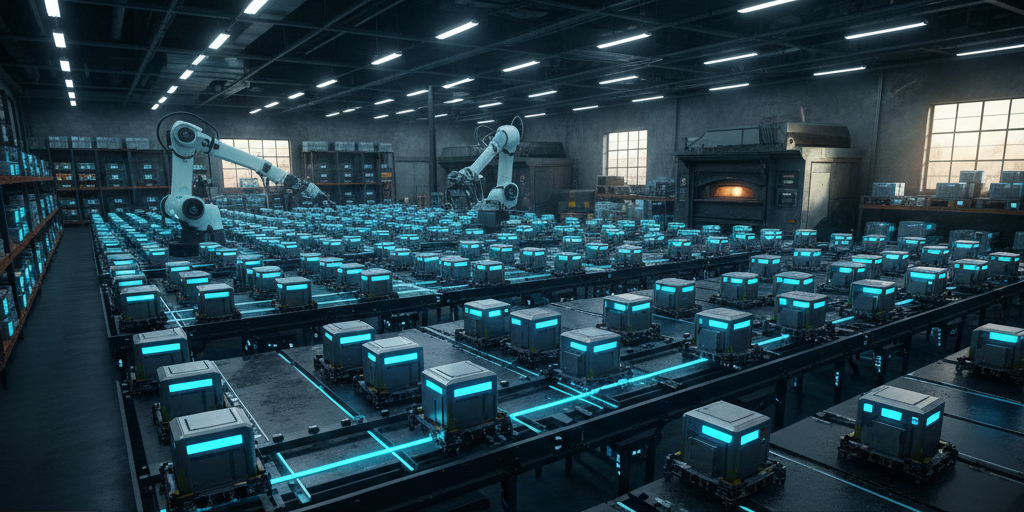
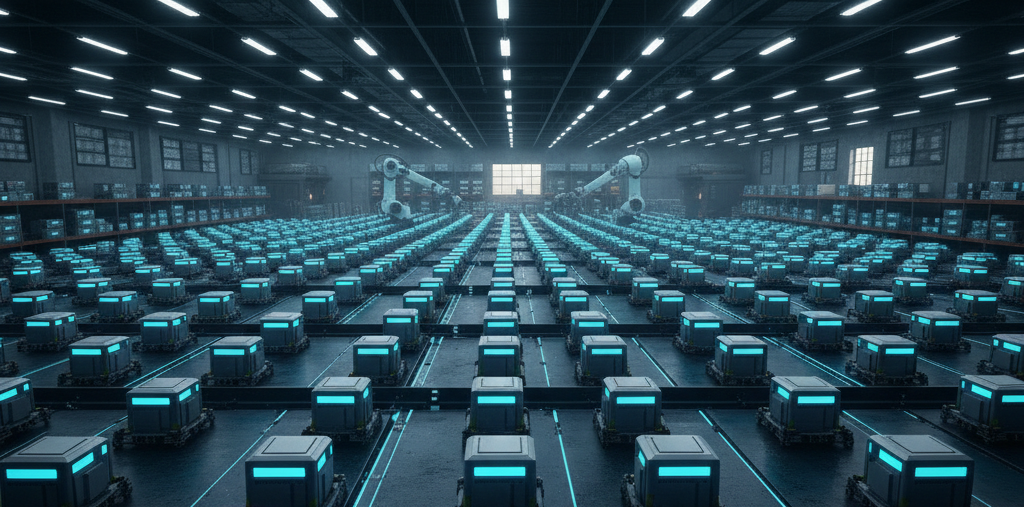
In the logistics sector, the scale is staggering. Global giants like Amazon and JD.com are no longer just using robots; they are orchestrating “fleets” that number in the millions. These aren’t just independent units; they are a collective.
- Swarm Intelligence: Using Agentic AI, these robots communicate with each other to prevent traffic jams in warehouses, dynamically reroute when a pallet is dropped, and optimize the entire facility’s flow without a central “human” dispatcher.
- Predictive Math: A silent revolution in 2026 is the use of “predictive math” in robotics. Instead of reacting to an obstacle, robots now use dual-number math to simulate “what-if” scenarios in milliseconds, anticipating a collision before it happens and adjusting their path intuitively.
- Lights-Out Warehousing: We are seeing the rise of facilities that operate in total darkness, as Physical AI doesn’t need light to “see”—it uses LiDAR and infrared sensors to move goods 24/7.
Why Small Businesses Should Care
It’s easy to look at a million-robot fleet and think, “That’s for the big players.” However, the most significant trend of 2026 is the democratization of Physical AI. Small and Medium Enterprises (SMEs) are finding that the “entry fee” for robotics has plummeted.
1. Robotics-as-a-Service (RaaS)
Small businesses no longer need to shell out $100,000 for a robot. With the RaaS model, a local coffee shop or a boutique manufacturing plant can “lease” a robotic agent for a monthly fee—often less than the cost of a part-time shift. If the robot breaks or the software needs an update, the provider handles it.
2. The Rise of the Cobot
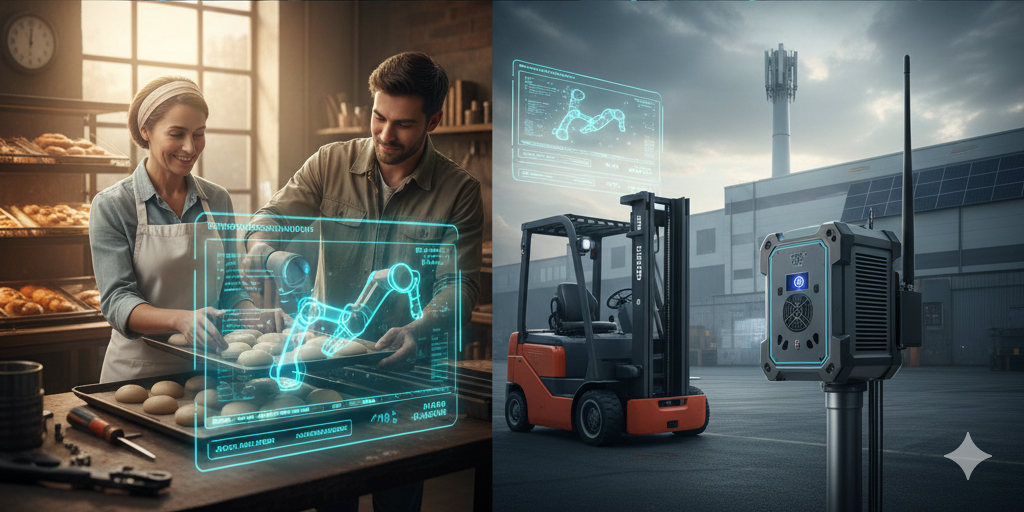
Collaborative robots, or cobots, are designed to work beside humans, not replace them. In 2026, cobots like the “Standard Bots Core” (priced around $37,000) are becoming standard in small shops.
- No Coding Required: These robots feature “AI-driven simplicity.” You don’t need a PhD to program them; you simply move the robot arm manually to show it what to do, and the AI handles the rest.
- Versatility: A single cobot can be a barista in the morning, a box-packer in the afternoon, and a floor-scrubber at night by simply switching its “hand” (end-effector).
3. Solving the Labor Gap
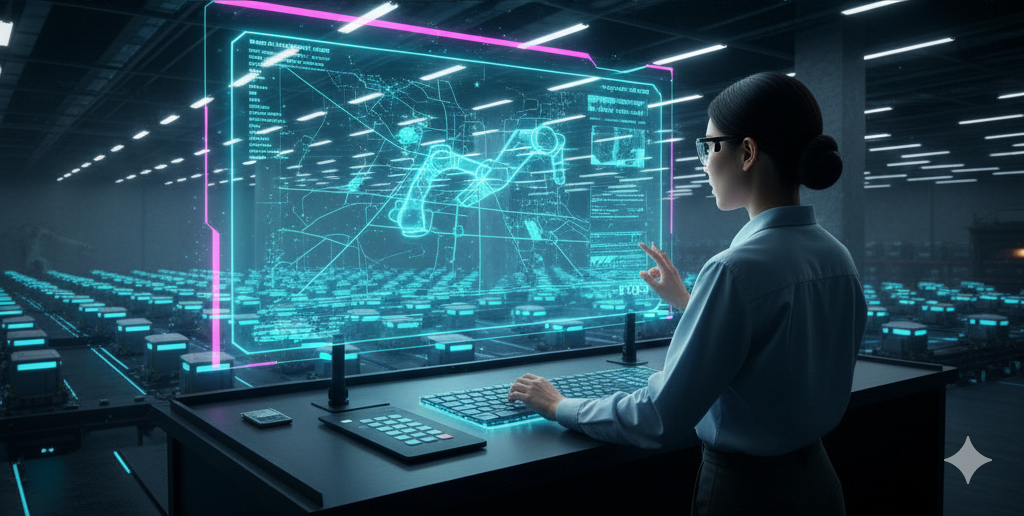
For small businesses in 2026, the primary driver for Physical AI isn’t just “efficiency”—it’s survival. With persistent labor shortages in sectors like hospitality, construction, and specialized manufacturing, Physical AI allows small teams to maintain output. A local welder can use an AI-guided welding cobot to handle the routine “long seams,” freeing the human expert to focus on complex, high-value custom work.
The Infrastructure Shift: Edge and 5G
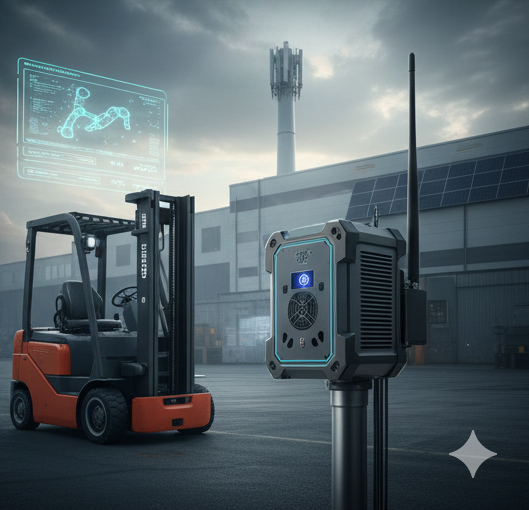
The reason Physical AI is exploding now is because the “brain” has moved closer to the “body.” In 2026, Edge Computing allows robots to process massive amounts of sensory data locally.
Technical Insight: By processing data at the “edge” (on the robot itself) rather than sending it to the cloud, latency is reduced to near zero. This allows a robot to catch a falling object or stop instantly if a human steps into its path—responses that require millisecond precision.
How to Prepare Your Small Business
If you’re a business owner, you don’t need to build a robot fleet today, but you should be “automation-ready.”
- Identify “Dull, Dirty, or Dangerous” Tasks: These are the prime candidates for Physical AI. Look for repetitive tasks that cause human fatigue or injury.
- Audit Your Connectivity: Physical AI thrives on data. Ensure your facility has the Wi-Fi 6 or 5G infrastructure needed to support a fleet of smart devices.
- Invest in “Plug-and-Play”: Look for modular systems that integrate with your existing ERP (Enterprise Resource Planning) or WMS (Warehouse Management System). In 2026, the best robots are the ones that talk to your current software.
Conclusion
Physical AI is the bridge between the digital and the tangible. As AI gains “bodies,” it is moving from our screens into our storefronts, warehouses, and workshops. For the small business owner, this isn’t a threat—it’s a superpower. It’s the chance to compete with the giants by using smart, tireless, and increasingly affordable hardware to do the heavy lifting.