


From Syntax to Sentiment: The Rise of Vibe Coding & Intent-Driven Development
For decades, the world of software development felt like a walled garden, accessible only to those fluent in the arcane languages of Python, Java, C++, and a myriad of other cryptic syntaxes. Building an application, no matter how simple, required a deep understanding of logical structures, data types, and obscure commands. The barrier to entry was high, effectively excluding countless creative minds from bringing their digital ideas to life.
But in 2026, the walls are crumbling. We are witnessing a profound transformation in how software is created, driven by the revolutionary concepts of “Vibe Coding” and “Intent-Driven Development.” This isn’t just about low-code or no-code platforms; it’s about shifting the paradigm from “writing code” to “expressing intent.” Now, non-coders, entrepreneurs, and domain experts are leveraging natural language to build sophisticated applications, bringing their visions to life with unprecedented speed and accessibility.
The Evolution: From Code to Conversation
Traditionally, if you wanted an app that, say, tracked your daily water intake, you’d have to:
- Design the UI: Sketch out screens, buttons, and input fields.
- Choose a Language: Pick Kotlin or Java for Android, Swift for iOS.
- Write Logic: Code functions for adding water, calculating totals, setting reminders.
- Connect to Databases: Implement storage for user data.
- Handle Errors: Write code to prevent crashes and provide graceful feedback.
This entire process was a meticulous, line-by-line translation of human thought into machine instructions.
With Vibe Coding and Intent-Driven Development, that translation layer is now handled by powerful AI models. Developers (or now, “Intent Expressers”) articulate their desires in plain language, describing the what and the why, and the AI engine then generates the underlying code, manages dependencies, and even deploys the application.
What is Vibe Coding?
“Vibe Coding” might sound whimsical, but it’s a powerful metaphor for capturing the essence and feeling of an application rather than its explicit instructions. Instead of specifying “create a button with onClick listener that calls saveWater(),” a vibe coder might say:
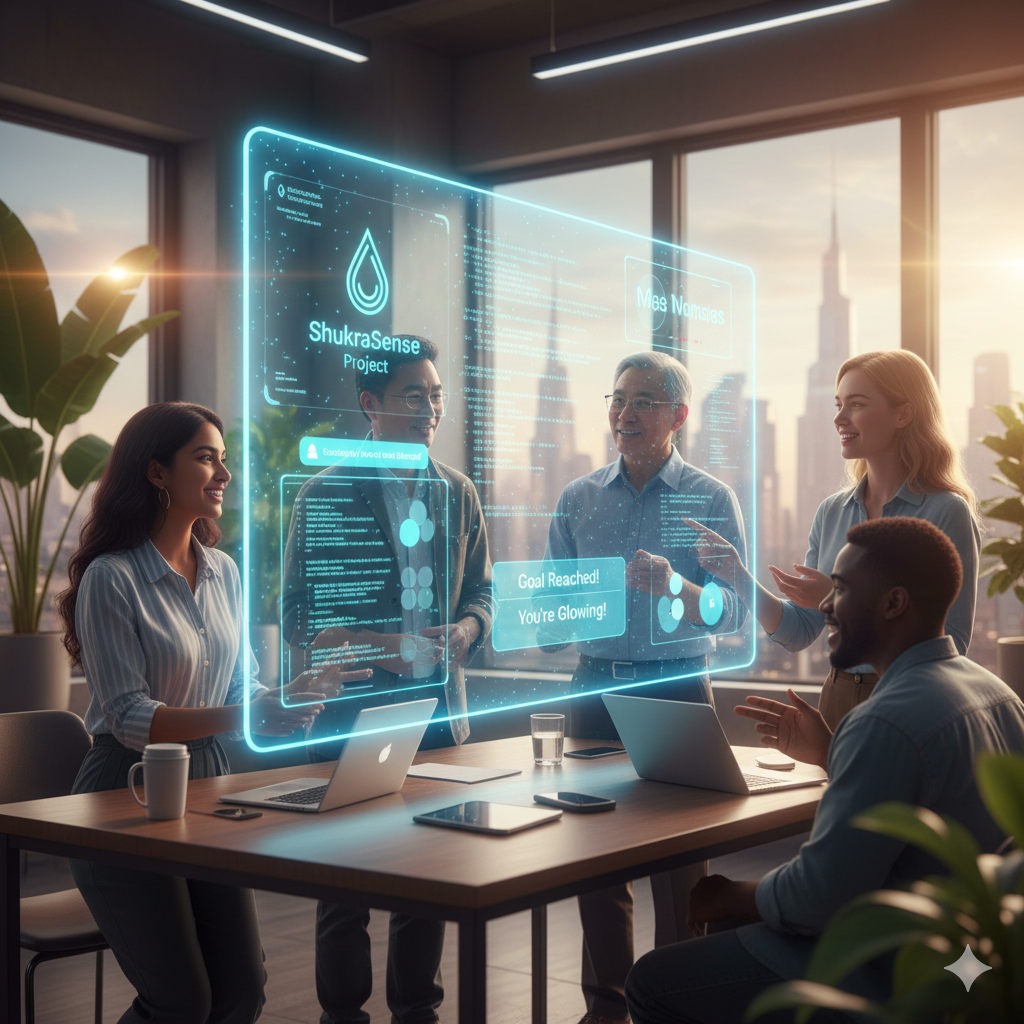
“I want a friendly, encouraging app that helps people track their daily water intake. It should feel clean and modern, use soothing blues and greens, and give positive affirmations when they reach their goal.”
The AI, empowered by advanced Large Language Models (LLMs) and generative capabilities, then interprets this “vibe.” It understands that “friendly” means using positive language, “clean and modern” dictates a certain UI aesthetic, and “soothing blues and greens” defines the color palette. It generates not just code, but an entire application ecosystem that embodies these qualitative descriptions.
Intent-Driven Development: The Engine Behind the Vibe
While Vibe Coding captures the aesthetic and emotional aspects, Intent-Driven Development (IDD) is the underlying technical framework. It’s about specifying the desired outcome rather than the steps to achieve it.
Consider your “ShukraSense project,” an Android app for tracking personal wellness metrics. An IDD approach would look like this:
Initial Intent: “Build an Android app called ‘ShukraSense’ for personal wellness tracking. It should allow users to log their mood, energy levels, and daily activities. It needs a clean, intuitive interface and secure data storage.”
The IDD engine, utilizing sophisticated AI agents, would then break this down:
- Interpret “Android app”: Initiate an Android Studio project, set up basic structure.
- Understand “wellness tracking”: Identify common wellness metrics, suggest data types (e.g., mood: slider 1-5, energy: text input, activities: categorical dropdown).
- Recognize “log…”: Generate input forms and submission logic.
- Process “clean, intuitive interface”: Apply a default Material Design theme, suggest common navigation patterns (e.g., bottom navigation bar for Home, History, Settings).
- Interpret “secure data storage”: Implement encrypted local storage (e.g., Room database) or suggest cloud options (e.g., Firebase Firestore with authentication).

After the initial generation, you refine the intent:
Refinement: “Add a ‘Goals’ section where users can set daily activity targets, like 10,000 steps or 8 glasses of water. The app should notify them when they reach a goal and show progress visually.”
The IDD engine then integrates:
- Goal Setting UI: Adds fields for defining goals.
- Progress Tracking Logic: Hooks into activity logging, calculates progress.
- Notification System: Implements local notifications for goal completion.
- Visual Indicators: Adds progress bars or celebratory animations.
This iterative process, driven entirely by natural language, allows the “developer” to focus on the user experience and business logic, leaving the intricate coding details to the AI.